Introduction
You have a customer plan. Campaigns, touchpoints, loyalty programs—all of it is planned out. Still, the results aren’t what you hoped for. Customers aren’t engaging. Some chances are missed. ROI isn’t where it should be.
Why does this happen? Often, it’s one simple thing: communication isn’t consistent. Even a solid plan can feel like a map without a compass. You know the direction, but you’re not moving steadily toward it.
Next, we’ll look at why this missing piece matters. We’ll see how automation can fill the gap and turn a plan into real results.
Why Even the Best Strategies Fail
A strategy can look perfect on paper. It defines your audience. It lays out campaigns. It marks all the right touchpoints. In real life, though, even careful plans often fail to deliver.
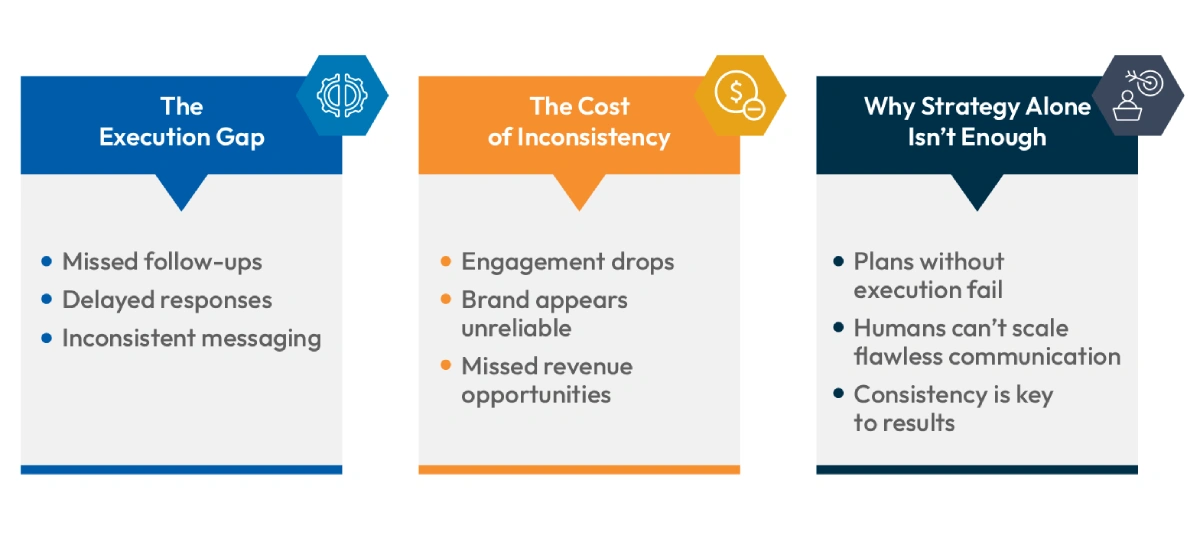
Imagine a customer gets a product recommendation that really fits them. Then, they hear nothing from your brand for six months. What happens? Engagement drops. Loyalty fades. Chances to sell more or bring them back are lost.
In short, inconsistent communication turns even the best plans into missed opportunities. You can have a perfect map, but without a steady way to follow it, progress stops.
The Value of Consistency in Customer Management
Customers respond better when a brand reaches out regularly. Not just once in a while. One well-timed message isn’t enough. Engagement grows when interactions feel like an ongoing conversation. This idea is key to keeping customers. When every touchpoint follows a clear, consistent approach, relationships stay strong. Customers notice. Trust grows. People keep coming back.
Sending Messages vs. Creating a Continuous Conversation
| Aspect | Sending Messages | Continuous Conversation |
| Frequency | Sporadic, occasional | Regular, predictable |
| Customer Experience | One-off interaction | Ongoing engagement |
| Relationship Impact | Weakens over time | Builds trust and loyalty |
| Response & Engagement | Lower, inconsistent | Higher, sustained |
| Brand Perception | Forgettable | Reliable and attentive |
Sending messages randomly doesn’t work. You need a steady conversation with your customers. When communication flows, customers notice every step of their journey.
Automation: The Missing Piece
Most companies know consistency is important. The tricky part is actually doing it. Automation makes it easier. It turns a plan on paper into real action.
How Automation Helps:
- Follow up on time: Customers get messages exactly when they need them—welcome emails, reminders after a purchase, and more.
- Personalized for each group: Messages fit different types of customers without doing everything manually.
- Same message everywhere: Emails, texts, app notifications—they all match and stay consistent.
Why It Matters
- Fewer mistakes and missed opportunities.
- Customers get a smooth and reliable experience.
- Teams can focus on bigger, more important work.
- You can track what works and improve over time.
Automation makes sure communication is consistent and useful. It turns a good plan into real results. Customers stay engaged, trust the brand more, and companies grow.
The Real Impact of Consistent, Automated Communication
When consistency and automation finally click, the results are obvious. Customers notice. Loyalty goes up. People stick around. Revenue grows.
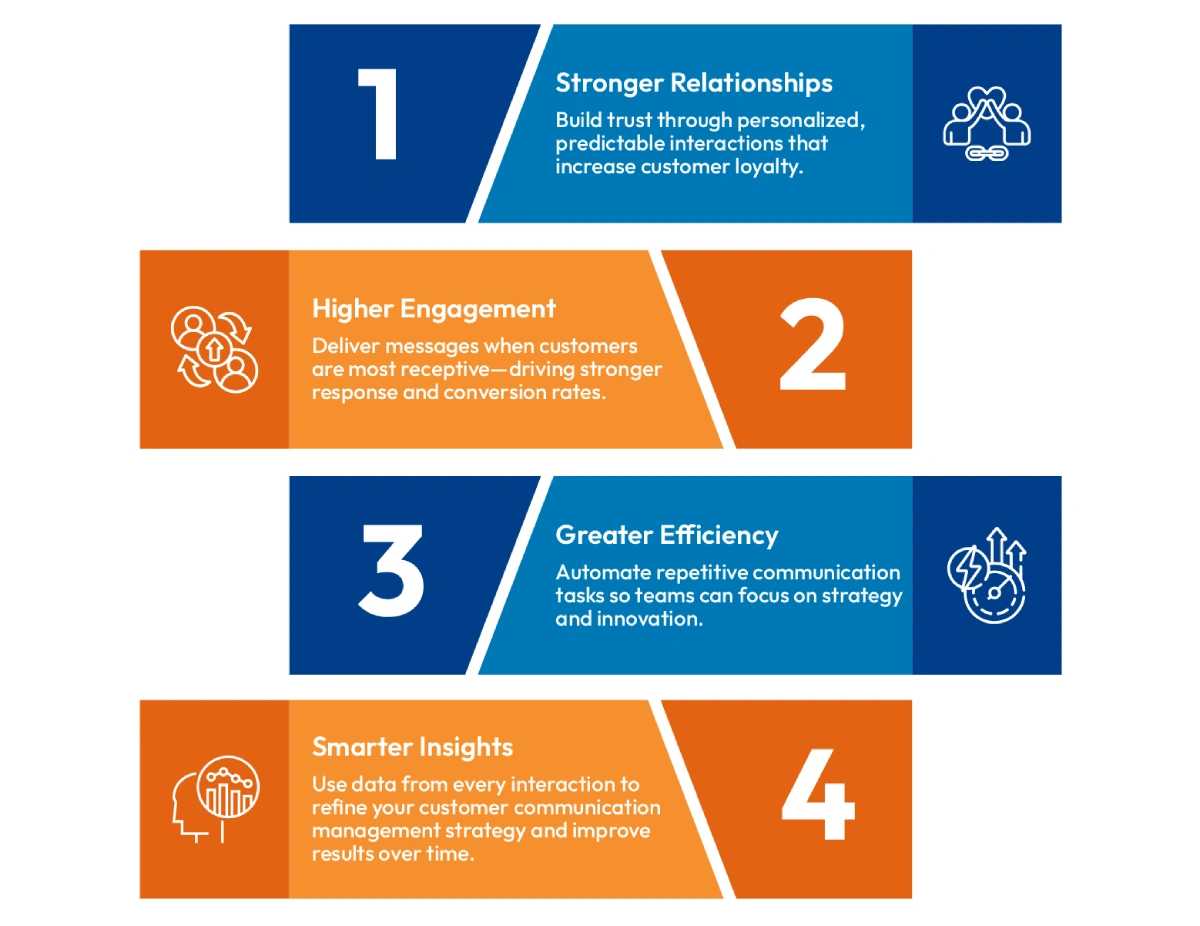
Once consistency and automation reshape your customer management strategy, the next step is clear: building the systems and workflows that make it happen seamlessly.
How to Start Plugging the Gap
Adding automation doesn’t mean starting over. It’s about connecting what you already have. Make sure every touchpoint happens consistently, thoughtfully, and with purpose. That’s how you bridge the gap.
Audit Your Current Communication Flow
Start with a clear picture of how communication currently functions within your organization. The goal is to uncover where consistency breaks.
Look for:
- Missed or delayed follow-ups
- Overlapping messages from different departments
- Irregular cadence in customer updates
- Gaps in post-purchase or renewal communication
Create a simple table like this to visualize your audit results:
| Stage | Current Communication | Frequency | Gaps Identified | Automation Opportunity |
| Onboarding | Welcome email | Once | No follow-up | Add a multi-step welcome sequence |
| Post-purchase | Order confirmation | Immediate | No Cross-sell | Introduce product recommendation workflow |
| Renewal | Manual reminder | Irregular – once a year or half-yearly | Missed timing | Automate renewal notices with dynamic offers |
This exercise helps pinpoint where automation will create the most value immediately.
Make Automation Actually Work
Once you notice messages falling through the cracks, set up automation that actually helps. Not just to save time.
Think about this:
- Customer actions: Send messages when it really matters—after a purchase, a subscription renewal, or if someone hasn’t done anything for a while.
- Timing: Pick the right moments to reach out. Don’t just follow a calendar.
- Relevant content: Make messages about what the customer actually cares about, not just what you’re selling.
Automation should feel like part of the customer journey. It shouldn’t be extra noise. Each message should help. It should be simple, clear, and useful.
Keep It Personal
Automation works best when it still feels human. Customers should feel like they’re talking to a brand, not a machine.
Here’s how you can do that:
- Look at what customers do and what they like to decide what to send.
- Add personal touches—names, past purchases, milestones.
- Group customers so messages actually make sense for them. No one-size-fits-all.
It’s all about balance. Automation handles timing and consistency. Your choices and attention make it feel personal. Thoughtful. Human.
Measure, Iterate, and Optimize
Once automation is live, shift focus to refinement. The goal is not simply to automate but to continuously improve.
Track and analyze:
- Open and click-through rates
- Conversion and churn rates
- Customer satisfaction feedback
- Timing and frequency effectiveness
Use these insights to refine your strategy, ensuring that automated workflows stay relevant and impactful as customer needs evolve.
Conclusion
A good customer plan isn’t judged by how detailed it looks on paper. It’s judged by how it actually works. Automation isn’t just about sending messages faster. It helps make customer interactions steady and reliable.
When messages are consistent, customers start to trust you. That trust isn’t built by marketing alone. It keeps people loyal, lowers churn, and makes each customer more valuable over time.
Here’s what many leaders miss: automation isn’t just a tech upgrade. It helps make timing, messaging, and purpose line up across every step of the customer journey. Each interaction shows customers they can count on you.
Companies that get this right build experiences that grow in value with every touch. That is what separates a good plan from a great one. It’s not about how it looks on paper. It’s about doing it consistently, every day.

Your strategy is solid; now make it seamless
Talk to our experts at Cincom Eloquence and discover how automated, personalized communication can elevate every customer interaction.
FAQs
1. How do I know which parts of my customer communication should be automated first?
Start with communication that’s time-sensitive, repetitive, and directly affects customer satisfaction, like onboarding, renewals, or follow-ups. These are high-impact areas where automation delivers immediate and visible results.
2. Can automation make customer interactions feel less personal?
Only if it’s used poorly. Effective automation uses customer data, behavior, and preferences to enhance personalization. The goal is to scale empathy, not replace it.
3. How does automated communication impact brand perception?
Consistency signals reliability. When customers receive timely, relevant messages, they begin to associate your brand with professionalism and trust, two qualities that directly influence retention and advocacy.
4. How can I measure the ROI of automated communication?
Track metrics beyond open rates, such as customer retention, engagement frequency, renewal rates, and lifetime value. These indicators show whether your automated communication is driving meaningful business outcomes, not just activity.