If there’s one thing that every organization would agree with, it’s that the customers are at the heart of everything. Without them, there is no growth, and no revenue. However, earning a customer is just the beginning. The main challenge lies in what comes next: keeping them engaged. It takes more than an excellent product or service to engage them and maintain a long-term relationship.
So how do you bridge this gap? The answer lies in a well-crafted customer engagement strategy. A strategy that drives momentum for customers throughout the buyers’ journey. It pushes your customers from awareness to decision, making them your brand advocates.
In this blog, we will talk about what customer engagement strategy really means. We will also explore how Customer Communication Management (CCM) solutions can be a powerful tool for driving the strategy.
What Is Customer Engagement Strategy?
A customer engagement strategy is essentially a plan that directs how an organization interacts with customers throughout the buyer’s journey. It outlines communication and engagement activities right from the awareness to the decision stage. The goal of client engagement strategies is to create positive experiences that boost customer loyalty and satisfaction and ultimately drive revenue.
Rather than focusing on transactions alone, this strategy emphasizes relationships. And in today’s hyper-connected world, that makes all the difference.
It could be a personalized message reminding a user of an abandoned cart. A chatbot that helps them troubleshoot a problem at midnight. Or a birthday email with an exclusive offer. Every touchpoint, when done right, becomes a chance to offer a great customer experience.

Revamp Your Customer Communication Management with Advanced Document Generation
Learn how to boost efficiency, build trust, and strengthen customer relationships.
Why Traditional Engagement Models No Longer Work
The concept of a consumer engagement strategy is not new. Before, organizations used to rely on generic email blasts, generic reminders, and one-size-fits-all messages. And for a while, those tactics worked. But not anymore.
Today’s customers are different. They’re informed and expect more from brands. They want organizations to understand their needs and fulfill them in a way that makes them feel completely satisfied with the offer.
Due to this fact, traditional customer engagement models often fall short. Let us understand it in detail.
1. Lack of Personalization
Generic messages feel cold and impersonal. Customers want interactions that reflect their preferences and behavior.
2. Siloed Communication Channels
When different departments use tools that don’t integrate with each other, the customer experience suffers. Messaging becomes inconsistent, and confusion creeps in.
3. Reactive Engagement
Many brands still wait for the customer to make their first move. This approach leaves revenue on the table and leads to missed opportunities.
4. Underutilized Data
Organizations that rely on traditional methods fail to utilize the value of customer data. Without analyzing customer behavior, it’s hard to send the right message at the right time.
5. No Direct Link to Revenue
Engagement for the sake of engagement isn’t enough. If your strategy doesn’t support measurable business goals, it’s incomplete.
To succeed today, organizations need a smarter way to engage with customers. This is where Customer Communication Management (CCM) makes a meaningful difference. CCM fits right into the picture of effective customer engagement strategies.
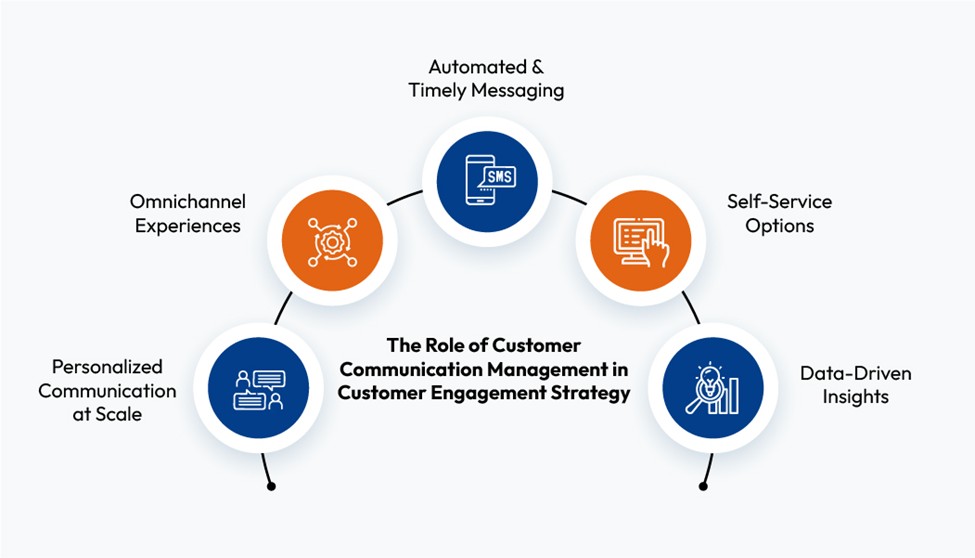
The Role of Customer Communication Management (CCM) in Customer Engagement Strategy
A CCM tool helps organizations centralize, automate, and personalize all customer-facing communications. Whether it’s a welcome message, a delivery update, or a product recommendation, CCM software enhances your customer engagement communication strategy. This ensures your brand speaks with one voice across every channel.
When used as part of the customer engagement strategy, CCM becomes more than just a tool. It becomes the engine that powers interactions that convert and generate revenue.
How Does CCM Help in Building a Customer Engagement Strategy?
A CCM platform becomes a key enabler when it comes to the customer engagement strategy framework. Here is what it can do for your organization:
- Personalize Communication at Scale: Use customer data to create tailored content that feels bespoke. The same content can be customized for each customer.
- Deliver Omnichannel Experiences: Coordinate communication across email, SMS, mobile apps, social platforms, and print.
- Automate Timely Messaging: Trigger communications based on customer actions, events, or preferences, such as sending a personalized message after 30 days of inactivity.
- Drive Self-Service Options: Empower customers with interactive documents, chat-based help, and secure portals to reduce support costs and improve satisfaction.
- Provide Data-Driven Insights: Measure open rates, click-through rate, conversion rates, and sentiment to gain insights. Then, use this data to improve campaigns for better results.
How to Build a Revenue-Focused Customer Engagement Strategy
Building a customer engagement strategy that generates revenue isn’t just about sending messages. It’s about sending the right message, at the right time, and for the right reason. Here is a step-by-step guide on how to develop a customer engagement strategy with a CCM that generates revenue.
1. Know Your Customer, Deeply
Customer engagement strategy starts with understanding who you’re talking to. To understand your customers, it is essential to go beyond basic demographics and understand their needs and preferences.
To do this, collect customer data at every touch point of their journey. This could be website visits, email responses, chat history, and product views. This could be an ongoing process.
After sufficient data is collected, segment your customers. You can create groups based on buying history, location, or engagement level. For example, loyal customers may need reward-focused messaging. First-time visitors may need education or onboarding support.
This step ensures your engagement starts from a place of knowledge, not with guesswork.
2. Set Revenue-Centered Objectives
In creating a revenue-generating customer engagement strategy, the next step is to identify objectives that can drive the strategy. Here are some key questions to consider before setting up the objectives:
- Do you want to increase the average order value?
- Are you aiming to boost renewals or reduce churn?
- Is your goal to improve lifetime value or drive more upgrades?
Set measurable goals. Choose KPIs that reflect financial outcomes. For instance, conversion rate, repeat purchases, upsell revenue, and retention rate. These targets give your strategy direction.
Without clear goals, your engagement efforts may create activity but not impact.
3. Map the Entire Customer Journey
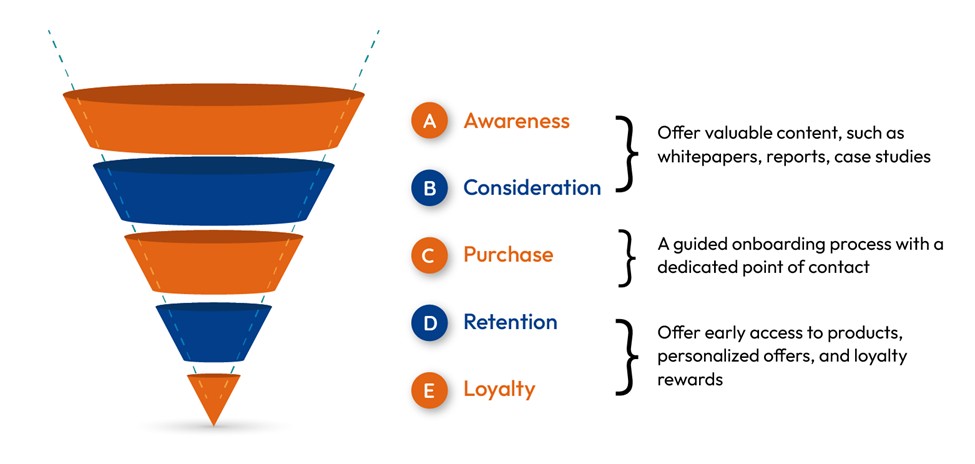
The buyers’ journey is the process that customers go through when interacting with a business, from the initial awareness of a problem to becoming a loyal customer. The key stages in the buyer’s journey include:
- Awareness
- Consideration
- Purchase
- Retention
- Loyalty
Within each stage, look for the moments where engagement can drive action. For example:
- Offer valuable content, such as whitepapers, reports, and case studies.
- Ensure a guided onboarding process with a dedicated point of contact.
- Offer early access to products, personalized offers, and loyalty rewards.
4. Personalize Every Interaction
Personalization isn’t ‘nice to have’ but expected. Customers respond to relevant, timely messages. Use what you know about the customer to shape your messages, such as their personal information, purchase history, web pages they have visited, or any specific configuration they asked for.
For example:
- Send a personalized reminder to a customer who left items in their cart.
- An early access to new products and services or an exclusive discount offer to a repeat buyer.
- ‘We miss you’ email to someone who hasn’t made a purchase for long.
Each message should feel like it was written just for them, even if it is automated.
5. Automate the Right Touchpoints
Automation has become an integral part of the customer engagement strategy. It makes engagement consistent and relevant. It also reduces errors and delays. This is the step where a CCM tool can play its part. Choose a CCM solution that integrates well with your CRM and other client-related tools. This will help you automate messages without losing personalization.
Start with simple workflows. Automate confirmations, welcome emails, and status updates. Then move to more advanced sequences, such as loyalty rewards or contract renewals.
Here are a few examples of smart automation:
- A feedback email sent after the product is delivered.
- A policy reminder
- A subscription reminder before the subscription ends.
Cincom Eloquence® is a powerful CCM solution that delivers consistent and personalized communications across all channels. Eloquence helps your team design, deploy, and deliver documents easily. This means you get communications out the door faster than ever before.
6. Track Results and Improve
Now that your customer engagement strategy is in place, the next crucial step is to track and measure its performance consistently. By monitoring key metrics, you can understand what’s working, identify gaps, and make data-driven improvements. Here are key metrics that you can track:
- Open and click rates
- Conversion rates
- Time to first action
- Unsubscribe or opt-out rates
- Customer retention and churn
Final Tip: Make Revenue the End Goal
Every message, every interaction, every touchpoint should support a bigger goal – bringing value to the customer and driving value back to the organization.
Turn Engagement into Revenue
Customer engagement strategy plays a much bigger role in driving revenue for organizations today. It drives business growth and helps build long-term customer relationships.
Explore how modern CCM solutions can elevate your customer relationships and transform your business results. Get in touch with our team to learn how Cincom Eloquence can help your organization build a robust customer engagement strategy that drives business forward.
FAQs
1- What are some effective customer engagement ideas for B2B companies?
B2B companies can engage customers through webinars, personalized onboarding, targeted newsletters, and product usage tips.
2- What does a strong customer engagement strategy framework look like?
A good customer engagement strategy framework includes understanding customer needs, mapping the buyer’s journey, setting engagement goals, and using the right tools to track and optimize touchpoints.
3- How to know if the strategy for customer engagement is working or not?
You can track key metrics to track the effectiveness and success of your client engagement strategies. They include:
- Open and click rates
- Conversion rates
- Unsubscribe or opt-out rates
- Customer retention and churn
4- Why is customer engagement critical to long-term revenue growth and retention?
Engaged customers are more loyal. They are most likely to repeat purchases and refer others. This directly boosts revenue and strengthens customer relationships.