Introduction: The Communication Paradox in Telecom
Telecom companies connect people every day. Still, they often have trouble explaining things to their customers. Bills, plans, and service options can be confusing. Technical words make it harder to understand.
A customer may ask about a bill or a service. If the answer is unclear or different in each place, it can be frustrating. When millions of questions happen every day, small problems add up. They affect how happy customers are and whether they stay loyal.
It is not about trying harder. Many telecoms spend a lot on tools and systems. The problem is keeping things organized. Without a clear way to make, check, and send information, messages can get messy. Customer Communications Management (CCM) can fix this. It brings together people, steps, and tools. Messages become correct, simple, and on time.
The Complexity Challenge: Why Telecom Communication Breaks Down
Clear communication in telecom is harder than it looks. The very scale and diversity of services that make telecoms powerful also make them complicated to manage internally. Each product line, billing system, and regulatory requirement adds another layer to an already complex communication environment.
Multiple Systems, Multiple Messages
Most telecoms operate with several disconnected systems for billing, marketing, customer care, and compliance. Each team manages its own content, templates, and approval processes.
- Result: Inconsistent tone and duplicated messages.
- Impact: Customers receive conflicting or unclear information about plans, offers, or service changes.
- Example: A customer receives an SMS about a new offer, an email with a different price, and a bill that doesn’t reflect either.

Smarter Communication Starts Here
Get omnichannel communication at scale and learn how telecoms can simplify complexity and strengthen every customer interaction.
Silos That Slow Down Execution
Even when the intent is to simplify, disconnected processes slow execution.
- Marketing must wait for IT to make content updates.
- Legal and compliance reviews delay time-sensitive messages.
- Regional teams create their own versions to meet deadlines, further fragmenting the brand voice.
The outcome is slow, reactive communication that fails to match customer expectations for immediacy and clarity.
Complexity as a Business Risk
For senior leaders, unclear communication is more than an operational issue. It directly affects:
- Customer retention: Confusing information leads to dissatisfaction and higher churn.
- Brand trust: Inconsistent experiences weaken credibility.
- Operational costs: Call centers spend a lot of time explaining things that should have been clear from the start.
The issue is not about sending more messages. It is about making each message useful. Telecom companies need a clear way to manage and send information at every point where they connect with customers. Customer Communications Management (CCM) helps with this. It brings order, visibility, and consistency to every interaction.
What “Smarter” CCM Really Means
Customer communication is not just about sending forms or one-way messages anymore. Today, telecom companies need to be quick, accurate, and flexible in every interaction. A good Customer Communications Management (CCM) system does more than handle templates. It helps deliver clear, personalized messages across all channels while keeping communication consistent and following the rules.
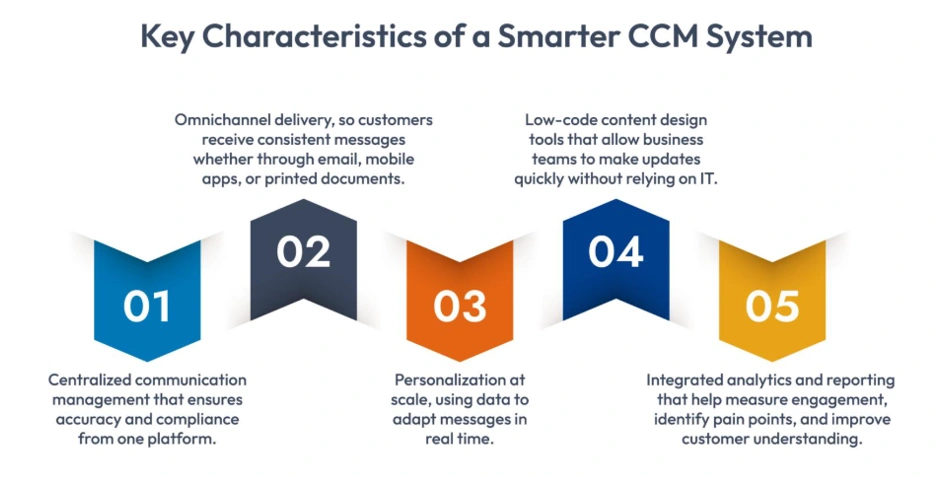
A smarter CCM telecom framework turns communication into a coordinated business function rather than a series of disconnected tasks. Instead of each team creating its own messages, a unified platform brings everyone together under one system of control. This shift not only improves message quality but also builds efficiency. Teams can collaborate faster, reduce duplicated work, and eliminate errors that often occur when multiple systems are involved.
The Business Impact: From Cost Center to Value Driver
For years, customer communication in telecom was treated as a necessary operational function. Bills had to be sent, notifications delivered, and compliance requirements met. While these processes were essential, they rarely contributed to growth. Modern Customer Communications Management (CCM) for Telecom changes that view. By centralizing and modernizing communication, it transforms everyday interactions into opportunities to strengthen relationships, improve efficiency, and support revenue growth.
Turning Clarity into Retention
Customer loyalty often comes from small moments. A clear bill or a simple notice can reassure a customer. Confusing messages can frustrate them and push them away.
- Give the same information everywhere. This builds trust.
- Send updates at the right time. This reduces worry when plans change or services go down.
- Make documents and messages simple. Customers understand better, and support calls go down.
Clear communication now has a real impact. It can keep customers and improve scores that show how happy they are.
Making Teams Work Faster
Old ways of sending messages are slow. Marketing writes, IT codes, legal checks, and operations sends. It takes time, and mistakes happen.
A better system helps teams move faster:
- Start messages from approved templates.
- Approvals happen automatically, so campaigns and updates go out quicker.
- Business teams can make changes themselves without waiting for IT.
Teams finish work faster, make fewer errors, and save money.
Keeping Communication Safe and Correct
Telecom must follow the rules. Every bill and message must meet strict standards. If systems are separate, mistakes happen.
- Track every change to messages.
- Check content automatically before sending.
- Keep one version so regulators know exactly what customers saw.
This keeps the company safe and makes customers trust the messages they get.
Helping the Business Grow
Clear and timely messages help the business too:
- Teams can send offers quickly.
- Personalized messages get more responses.
- Customers understand new services better, so they buy or upgrade more.
When communication improves, so does business performance. A modern CCM telecom solution shifts customer communication from a background process to a visible contributor to revenue.
For telecom leaders, the business case for modern communication is clear. What was once viewed purely as a cost can now become a measurable driver of growth, efficiency, and trust. Smarter CCM telecom systems redefine how organizations connect with their customers.
Operationalizing Clarity: Turning CCM Strategy into Execution
Many telecom leaders know that clear communication matters. Turning that idea into daily work is not always easy. Operationalizing clarity means building simple habits into how the company works. It means having tools, rules, and responsibility all in one place so that every message is correct, on time, and follows the rules.
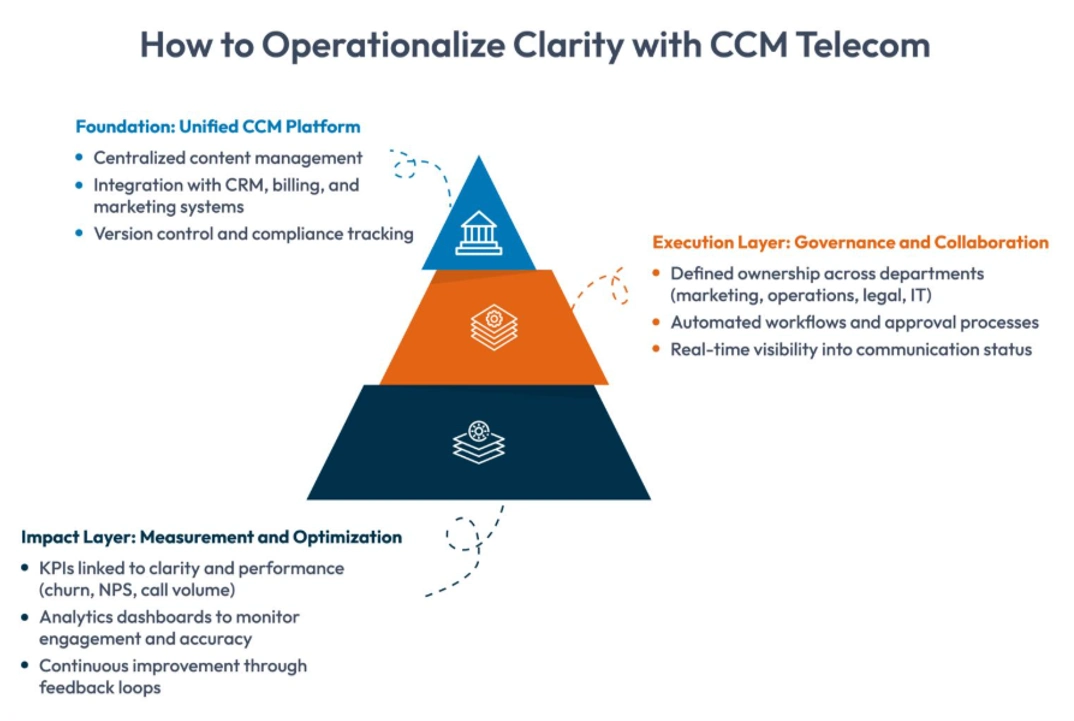
Clarity does not come from technology alone. It comes from doing things carefully every day and from a culture where everyone takes responsibility. When Customer Communications Management (CCM) is part of everyday work, teams move faster, decisions get better, and customers get messages they can trust. Companies that do this now will set the bar for customer experience in telecom.
Conclusion: Building the Future of Clear Communication
Clarity will soon decide which telecoms succeed. As networks grow with 5G, IoT, and AI services, companies that explain complex information simply will stand out.
Smarter CCM solutions help make this possible. They give companies the structure and habits needed to send messages that customers understand and act on.
The next wave of success will not come from faster networks alone. It will come from trust, transparency, and communication that feels personal, even at scale. Leaders who focus on clear communication today are shaping the customer experience of tomorrow.
Clear communication is now a measure of customer loyalty. Tools like Cincom Eloquence help telecoms send messages smarter, faster, and with confidence.
As communication becomes the new measure of customer loyalty, clarity must lead the way. Cincom Eloquence gives telecoms the tools to communicate smarter, faster, and with complete confidence.
FAQs
1. How can telecoms make customer communication simpler without adding new tools?
By consolidating existing systems under a smarter CCM Telecom framework that manages all messaging from one place.
2. What does “smarter CCM” mean in practice?
It means combining people, processes, and technology so every message—regardless of channel—is consistent, compliant, and on time.
3. Why is operational clarity important in telecom communication?
Because millions of small, everyday interactions define customer trust. Consistency across those moments drives loyalty and reduces churn.
4. How can CCM improve team collaboration in telecom organizations?
A unified CCM platform eliminates silos, speeds approvals, and ensures everyone works from the same source of truth.
5. What’s the next step for telecom leaders aiming to modernize communication?
Embed Customer Communications Management (CCM) into daily operations to make clarity and coordination a core business function.