Introduction
In today’s hypercompetitive industrial manufacturing market, having a good product is no longer enough to guarantee sales success. The difference between a sales team that hits targets and one that consistently exceeds them often lies in the support structure around it—sales automation for industrial manufacturing. This strategic discipline ensures that sales teams have the necessary tools, content, processes, and technology to engage buyers effectively, manage complex configurations, and close deals more efficiently.
Industrial manufacturing organizations that invest in well-structured sales automation strategies are seeing measurable returns. According to recent research, sales teams utilizing automation report an average 14.5% increase in productivity, with many experiencing a 33% boost in overall efficiency. These figures aren’t just numbers, they’re proof that aligning people, processes, and platforms directly impacts performance.
In this blog, we’ll define sales automation in detail, clarify what it does, and walk through best practices that high-performing industrial manufacturing sales teams rely on. From understanding ownership and strategy to choosing the right tools like CPQ software for complex products, this resource covers it all.
What is Sales Automation?
At its core, sales automation is a strategic function that empowers all customer-facing teams—sales, marketing, and customer success—to drive consistent, high-impact buyer interactions. While definitions may vary slightly across industries, the goal remains constant: equipping teams with the right knowledge, tools, and workflows to guide prospects through the sales cycle efficiently and effectively.
More than just a support function, sales automation bridges the gap between siloed departments. It aligns messaging between marketing and sales, ensures seamless handoffs to customer success, and creates a unified approach to the customer journey. This alignment leads to reduced sales friction, better forecasting, and improved conversion rates.
Know more about sales automation. Schedule a demo now!

Sales Leaders: Ready to Close Deals Faster?
From faster quotes to fewer errors, see how the right tools can turn your sales process into a growth engine.
What Does Sales Automation Do for Industrial Manufacturers?
Sales automation builds the operational foundation that turns strategy into execution. For industrial manufacturers, this means aligning teams, systems, and buyer touchpoints around a common goal—accelerating revenue growth through consistent, personalized, and value-based selling, even in highly complex sales cycles.
It starts by standardizing workflows across the revenue team—from marketing to sales to customer success—ensuring that content, messaging, and interactions remain cohesive throughout the buyer journey. In manufacturing environments, where quotes often involve engineering input, regulatory compliance, and multiple approval steps, this cohesion eliminates the fragmentation that typically slows down deal velocity.
Next, sales automation streamlines communication by creating shared systems of record and centralized content repositories so that every stakeholder—from sales reps to engineers to finance—operates with the same intelligence and context.
Relevant strategies also operationalize best practices, embedding them directly into reps’ daily tools via guided selling workflows, recommendation engines, and just-in-time training modules. For manufacturers, this ensures sales teams can quickly configure complex products, generate accurate pricing, and respond to customer demands without waiting on back-office support.
Modern sales automation processes are fueled by real-time data and streamlined workflows. These capabilities allow industrial manufacturing reps to:
- Instantly surface the most relevant assets based on deal stage, persona, or industry.
- Receive timely prompts during customer interactions based on prior engagement data.
- Automate repetitive tasks like follow-ups and content personalization.
- Continuously improve through performance analytics and feedback loops.
What is Sales Automation Software?
After understanding what sales automation means strategically, it becomes clear why technology plays a critical role. Sales automation software is the operational engine behind this strategy, providing a centralized ecosystem to manage, execute, and scale automation efforts.
These platforms go beyond simple content repositories. They integrate with your CRM, marketing automation tools, CPQ software, and learning management solutions to create a seamless workflow for sales teams.
Sales automation technology builds a performance-driven infrastructure where reps are always equipped, managers are always informed, and leaders can scale success with precision.
Sales, Marketing, or RevOps: Who Owns Sales Automation?
Management of sales automation is a shared responsibility across multiple functions. While sales leaders are often the most visible champions, the real power comes from cross-functional alignment between Sales, Marketing, Product, and Revenue Operations (RevOps). For industrial manufacturers, this collaboration is especially critical since sales processes often involve engineering input, technical documentation, and compliance-driven approvals.
-
Sales: Field-Level Execution
Sales leaders typically own automation at the tactical level. From guiding field efforts to identifying performance gaps, they ensure reps are trained, equipped, and enabled to deliver results by making the right use of sales automation tools.
-
Marketing: Content-Driven Engagement
Marketing develops customer-facing assets such as case studies, messaging guides, competitive battle cards, and more. With robust content management and automation tools, marketing can deliver tailored resources when and where reps need them—ensuring message consistency and strategic alignment across every interaction.
-
Revenue Operations (RevOps): Strategic Alignment
Enterprise automation can’t thrive in silos, and RevOps acts as the connective tissue across marketing, sales, and customer success. By owning CRM infrastructure and leveraging analytics, RevOps drives data-informed decisions, enforces process discipline, and ensures accountability across the funnel.
In short, success lies in unified, cross-functional execution, irrespective of organization size.
What is a Sales Automation Strategy and Its Key Elements?
A sales automation strategy is a structured, organization-wide approach to empowering sales teams with the right training, tools, content, and insights at the right time. Effective strategies align people, processes, and technology to eliminate inefficiencies, reduce ramp time, and drive consistent deal outcomes.
Elements of a Sales Automation Strategy
1- Sales Content and Knowledge Management
Teams need centralized, dynamic repositories where they can find relevant, updated assets on demand. Platforms serve playbooks, battle cards, and case studies via AI-driven recommendations based on sales stage and buyer behavior.
2- Sales Training and Continuous Learning
Prioritize ongoing learning through microlearning modules, real-time feedback, and AI-powered coaching. Reps retain knowledge, adapt to objections, and stay sharp in a constantly changing landscape.
3- Sales Automation Technology
Tools like CPQ software, CRM, and engagement platforms automate repetitive tasks—from proposal generation to contract execution. Deal scoring and forecasting guide reps on where to focus their efforts.
4- Data-Driven Sales Automation
Use real-time analytics dashboards and engagement tracking to see what’s working and what’s not. Metrics like buyer engagement, content usage, and activity-to-outcome ratios inform strategy and personalize seller-buyer interactions.
5- Sales and Marketing Alignment
Collaboration ensures lead handoffs are seamless, messaging is consistent, and content reflects real buyer needs. Account-based marketing (ABM) strategies help bridge gaps and align both teams toward shared goals.
Do you want to adopt sales automation for your organization? Talk to our CPQ experts today!
How to Implement Sales Automation in Your Industrial Manufacturing Organization?
Step 1: Assess Your Current Sales Process
Map workflows, identify inefficiencies, and pinpoint where reps are losing momentum. Use analytics to evaluate conversion rates, pipeline velocity, and rep performance.
Ask yourself:
- Where are deals getting stuck in the sales cycle?
- Which reps underperform, and why?
- Do we have visibility into the buyer journey from start to finish?
Step 2: Define Clear Goals and KPIs
Set measurable objectives tied to business and sales outcomes, such as improved win rates or shortened sales cycles.
Ask yourself:
- What business goals should automation support?
- Are KPIs actionable and aligned across teams?
- How will success be tracked?
Step 3: Implement the Right Tools
Deploy tools such as CPQ software for accurate pricing, AI for guided selling, and workflow automation. Integration ensures consistency and efficiency.
Ask yourself:
- Are our tools helping or hindering sales execution?
- Is CPQ integrated with CRM and ERP platforms?
- Can AI improve pricing, bundling, or recommendations?
Find Out How Much You Can Save with Sales Automation. Use our ROI calculator now!
Step 4: Align Sales and Marketing Teams
Establish ongoing feedback loops to ensure content, messaging, and targeting evolve with buyer needs.
Ask yourself:
- How often do sales and marketing collaborate on messaging?
- Are marketing assets aligned with the sales team’s real-time needs?
- What systems close the feedback loop?
Step 5: Train Your Sales Team with Ongoing Learning
Implement platforms for real-time coaching, certifications, and AI-driven learning paths.
Ask yourself:
- Are reps confident using tools and articulating value propositions?
- How adaptive is current training?
- How is learning reinforced after onboarding?
Step 6: Continuously Measure and Optimize
Use dashboards and performance metrics to identify gaps, test strategies, and iterate. A/B test content, adjust playbooks, and measure outcomes.
Ask yourself:
- Which tactics improve deal outcomes?
- How often is program effectiveness evaluated?
- Are we adapting to buyer behavior changes?
Aluminum Trailer Company streamlined their sales process and improved close rate with Cincom CPQ. Want to know the full story?
How to Measure the Success of Sales Automation?
Measuring the effectiveness of sales automation is essential to ensure your initiatives are delivering real business value. Tracking the right Key Performance Indicators (KPIs) provides insights into what’s working, where gaps exist, and how to optimize your processes.
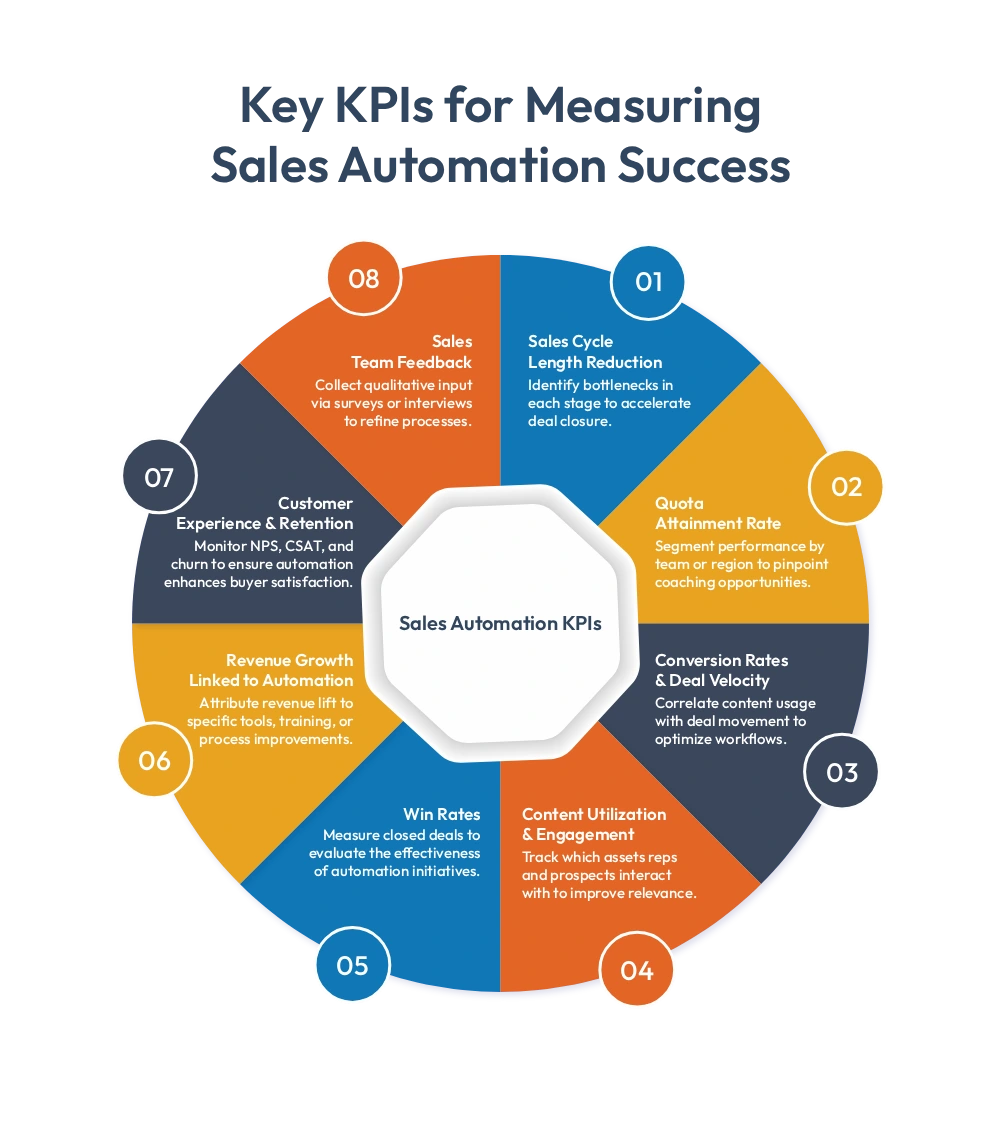
Key KPIs to Track Sales Automation Effectiveness:
- Sales Cycle Length Reduction – Analyze each stage of the sales cycle to detect bottlenecks or delays. Shorter cycles indicate smoother workflows and better-equipped reps.
- Quota Attainment Rate – Track monthly quota achievement and segment by team, region, or tenure to identify high performers and areas needing support.
- Conversion Rates & Deal Velocity – Correlate content usage, lead engagement, and workflow efficiency with conversion metrics to see which automation tools are driving results.
- Impact on Customer Experience & Retention – Measure post-sale engagement through Net Promoter Score (NPS), Customer Satisfaction (CSAT), and churn rates. A seamless sales process positively impacts long-term relationships.
- Content Utilization & Engagement – Monitor which resources reps use most and how prospects interact with them to optimize content strategy.
- Win Rates – Track the percentage of deals closed successfully to evaluate how automation improves sales effectiveness.
- Revenue Growth Linked to Automation – Attribute revenue increases to automation initiatives, including tool adoption, streamlined processes, and enhanced team efficiency.
- Feedback from Sales Teams – Gather qualitative insights via surveys, interviews, and roundtables to understand the real-world impact of automation on daily workflows.
Why Is Sales Automation Important for Industrial Manufacturers?
Sales automation goes beyond efficiency, it drives measurable business outcomes by streamlining processes, empowering reps, and enhancing buyer engagement. For industrial manufacturers, where deals are complex, highly customized, and often involve engineering collaboration, automation helps bridge the gap between sales, product, and production.
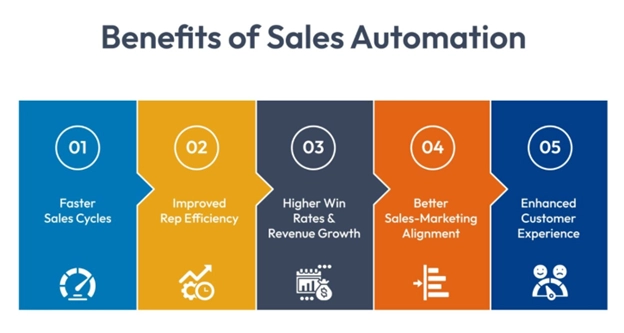
- Faster Sales Cycles – Tools like CPQ software automate quoting and pricing, eliminating manual calculations and approvals. This reduces errors and accelerates deal closure.
- Improved Rep Efficiency – Automation minimizes time spent on repetitive tasks, allowing reps to focus on high-value activities like relationship building and solution selling.
- Higher Win Rates & Revenue Growth – Personalization enabled by automation helps reps tailor proposals, pricing, and offers to buyer needs, increasing the likelihood of successful deals.
- Better Alignment Between Sales and Marketing – Shared goals, coordinated content strategies, and integrated data ensure consistent messaging across every touchpoint.
- Enhanced Customer Experience – Automation ensures timely, relevant, and personalized communications, resulting in smoother buyer journeys and stronger engagement.
Sales Automation Best Practices for Maximum Impact
To maximize the value of sales automation, follow these best practices:
- Align Teams, Tools, and Data – Ensure that sales, marketing, and RevOps work together with consistent goals and shared access to insights and performance metrics.
- Focus on Content Relevancy – Keep resources up-to-date and contextually tailored for different buyer personas and stages of the sales process.
- Ensure Cross-Functional Collaboration – Continuous communication between sales, marketing, and operations improves feedback loops and process optimization.
- Continuous Training and Coaching – Equip reps with microlearning modules, role-based training, and real-time guidance to maintain high performance in an evolving sales environment.
How CPQ Accelerates Sales Automation with Precision and Scale for Industrial Manufacturers?
Configure-Price-Quote (CPQ) software is a cornerstone of sales automation, enabling teams to handle complex pricing and quoting efficiently.
- Pricing Accuracy & Faster Quotes – Automate complex pricing rules and approvals to generate precise quotes instantly, reducing errors and delays.
- Optimized Deal Structuring – CPQ engines guide reps in bundling products, applying discounts, and suggesting upsells based on customer needs and historical data, ensuring every deal is strategically optimized.
- Seamless Integration Across Systems – Integration with CRM, ERP, and contract lifecycle management platforms creates an end-to-end automated workflow, eliminating data silos and enabling real-time updates across departments.
Wrapping Up
Adopting a structured, data-powered sales automation process is essential. From aligning teams and workflows to boosting customer experiences and revenue, it’s the foundation for scalable growth.
Cincom CPQ™ simplifies configuration, accelerates pricing, and automates quoting—making it a core engine of technology sales automation. Integrated with CRM, ERP, and other platforms, it equips your team to close complex deals with speed, precision, and confidence.
Embrace the future with Cincom Systems
Ditch outdated processes and discover how our intelligent solutions help industrial manufacturers enhance efficiency and drive revenue growth.
FAQs
1- What is the meaning of sales automation?
Equipping your team with tools, content, technology, and training to engage buyers and close deals efficiently. For manufacturers, this means managing complex product configurations and approvals with greater accuracy and speed.
2- What is a sales automation program?
A structured strategy aligning tools, content, training, and data to improve buyer engagement and sales performance. In manufacturing, it also ensures seamless collaboration between sales, engineering, and production teams.
3- Why is CPQ considered a key sales automation tool?
Automates pricing, quoting, and approvals—reducing errors and accelerating deal closure. For industrial manufacturers, CPQ is critical in configuring highly customized products and integrating with ERP or CAD systems.
4- How does sales automation impact performance and revenue?
Provides personalized content, guided selling, and process efficiency—leading to shorter cycles and higher revenue. In manufacturing, it reduces quoting delays, improves accuracy, and strengthens competitiveness.
5- How do I know if our sales automation strategy is working?
Track metrics like sales cycle length, quota attainment, and conversion rates via CRM and analytics tools. Manufacturers should also measure reductions in engineering involvement during quoting and improvements in order accuracy.