Sales proposals are a critical part of closing deals. They bridge the gap between a client’s interest and final purchase. A good sales proposal tells clients accurately about the final product or service, how much it will cost, and why the solution is right for them.
For many sales teams, creating proposals is still a tiring and frustrating process. They have to deal with multiple spreadsheets, scattered documents, and endless email threads. All of this and the endless to-and-fro often get in the way. The result is delays, mistakes, and missed opportunities.
Sales proposal automation changes that. And to achieve that, one of the most effective tools is Configure, Price, Quote (CPQ) software. In this article, we’ll explore sales proposal automation, differentiating manual proposal creation with a modern CPQ-powered approach. We’ll explore why traditional methods fall short, what CPQ can do differently, and how switching can lead to a strong return on investment.
The Problem with Manual Quoting: Why It’s Time to Change
Many organizations still rely on manual quoting processes. This is mainly because they are familiar with old processes and the steps involved, and don’t want to disrupt it. However, over time, manual processes create more problems than they solve.
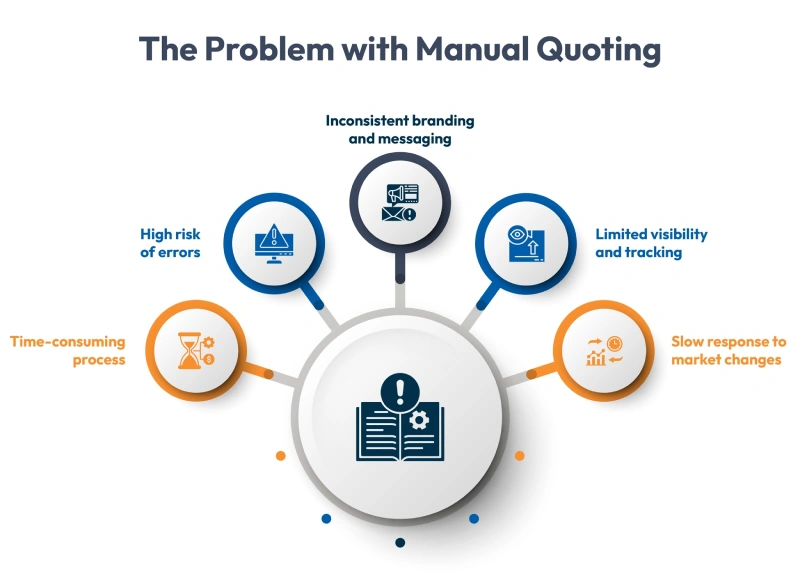
Time-Consuming Process
Manual quoting can take days to complete. The time taken can go up to weeks in case of complex products and services. Apart from the time taken to create the quote, sales reps also spend time getting approvals, verifying pricing, and product details. Every extra step slows down the process and increases the chances of errors.
High Risk of Errors
When pricing is taken from spreadsheets, documents, or physical files, one wrong entry can lead to costly mistakes. Sales reps have to be extra careful while fetching the correct prices and entering them in the quote. Even then, the chances of errors are still high. These errors may result in incorrect prices, invalid configurations, or missing items.
Inconsistent Branding and Messaging
Different sales reps often use different templates, descriptions, and formatting. Moreover, their writing style and tone of voice may differ too. This inconsistency weakens the company’s image and creates confusion for customers.
Limited Visibility and Tracking
It’s difficult to track a proposal’s progress in a manual process. This is mainly because there is no system in place for sales reps to check if the quote has been opened or read. They don’t always know if the customer has any questions. That makes it harder to follow up effectively.
Slow Response to Market Changes
When enterprises make changes to valid configurations and prices or a new product is launched altogether, updating every template and document can become tiring and time-consuming. It’s also easy to miss something. This delay can make you less competitive when compared to other organizations.
Manual quoting holds your sales process back. It is reactive rather than proactive. In fast-moving markets, that’s a risk you cannot afford.

Transform Sales Process Automation and Drive Growth with CPQ Solutions
Analyze the true value a CPQ solution can bring.
Sales Proposal Automation Comparison: CPQ vs. Traditional Methods
The differences between manual quoting and CPQ become clear when you explore the sales proposal automation comparison.
| Feature / Capability | Manual Quoting Process | CPQ-Powered Proposal Automation |
| Speed | Often takes days | Can be done in minutes |
| Accuracy | Errors are common | Automated rules ensure accuracy |
| Consistency | Varies by sales rep | Every proposal follows standards to ensure same tone and style |
| Approvals | Handled by email, often slow | Built-in approval workflows |
| Integration | Data entered manually into CRM or ERP | Direct integration with CRM, ERP, Email, and other systems |
| Customer Experience | Slower responses and outdated information | Quick, personalized proposals |
| Scalability | Becomes harder as teams or catalogs grow | Handles scalability and complexity with ease |
Looking at this sales proposal automation comparison, CPQ clearly offers more than just speed. It changes how your sales team works and how your customers experience the buying process.
Key Features of a Powerful CPQ Solution
A strong CPQ solution does more than just generate quotes. It removes bottlenecks and improves the quality of every proposal. Here are the features that make a real difference.
Product Configuration
If your products have multiple options or customizations, product configuration rules ensure every proposal contains valid combinations. This eliminates the risk of selling something that cannot be delivered.
Automated Pricing and Discounts
Pricing is one of the most common areas of errors or mistakes. CPQ applies your pricing rules automatically. Whether it’s volume discounts, regional adjustments, or seasonal promotions, the system ensures accuracy every time.
CRM and ERP Integration
A good CPQ connects directly with your customer database and your inventory or cost systems. This means the proposal always reflects the latest customer details, product availability, and pricing.
Professional Templates
Built-in templates ensure every proposal matches your brand’s style. They include approved descriptions, legal terms, and pricing layouts, so there’s no need to start from scratch.
Approval Workflows
Instead of sending documents back and forth for approval, CPQ routes them automatically to the right person. This keeps the process moving and automatically creates a record of all approvals.
Analytics and Reporting
Tracking your proposal win rate, average turnaround time, or most requested products becomes simple. This data helps you refine your sales approach and spot new opportunities.
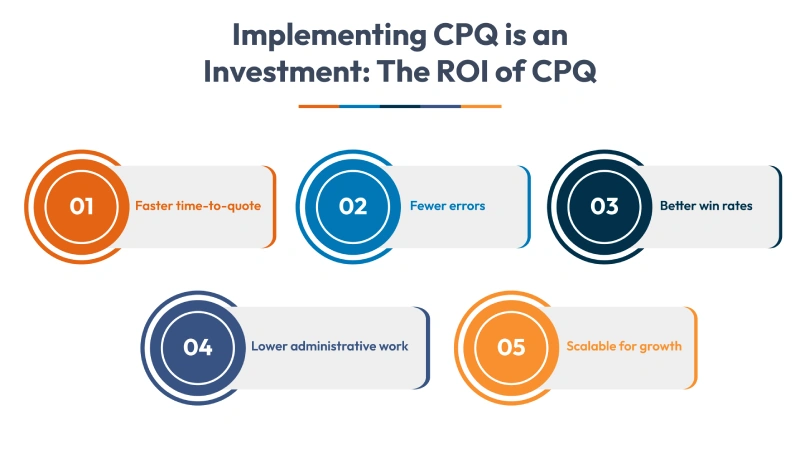
Making the Switch: The ROI of CPQ
After analyzing the sales proposal automation comparison, it is clear that implementing CPQ is an investment. Here’s what you get in return when you choose a CPQ solution for your enterprise.
Faster Time-to-Quote
When proposals or quotes are sent to clients in minutes instead of days, organizations respond to more opportunities in less time. That said, being first with an accurate quote often makes the difference between winning and losing a deal.
Fewer Errors
With automation, the chances of sending out an incorrect price or an invalid configuration are reduced dramatically. Using a CPQ solution means zero errors, less rework, and fewer customer disputes.
Better Win Rates
A quick, well-presented, and accurate proposal makes a stronger impression on clients. It shows you understand the customer’s needs and can meet them without delays.
Less Administrative Work
CPQ enables automated workflows for sales teams. This means sales reps spend less time chasing approvals, checking prices, or formatting documents. This also allows them to focus on selling instead of handing mundane administrative tasks.
Scalable for Growth
As your team grows or your products become more complex, CPQ keeps the quoting process smooth. It can handle a large number of configurations without slowing down.
Some companies see measurable improvements within a few months. For many, the system pays for itself in less than a year.
Conclusion
The sales proposal automation comparison between manual quoting and CPQ highlights how both methods are different when it comes to speed, data accuracy, consistency, and the customer experience.
Manual methods may feel familiar, but they often slow you down. They make it harder to compete in markets where buyers expect fast, precise, and professional proposals.
CPQ offers a modern approach. It helps sales teams work faster, reduce mistakes, and present a polished proposal every time. For many organizations handling complex products and services, making the switch is one of the most effective ways to improve sales performance.
FAQs
1- What is sales proposal automation?
Sales proposal automation is about utilizing software and technology to create and send sales proposals quickly and accurately, minimizing errors and inaccuracies. It replaces manual work with automated processes for product configuration, pricing, discount, and proposal creation.
2- How does CPQ software help with automation?
CPQ software combines product configuration, pricing, and quoting in one automated system. That is how it ensures that proposals are correct, consistent, and include up-to-date information.
3- What are the main areas of focus for organizations when implementing CPQ software?
The primary areas are setting up the product and pricing rules in the system, migrating data, integrating CPQ software with existing CRM and ERP systems, and training users for the best utilization. Working with a provider that offers good onboarding support can make this seamless.
4- What are the benefits that organizations may see after the implementation?
Organizations may notice faster quote turnaround times, higher customer satisfaction, higher win rates, and fewer errors within the first few months.