Manual document creation has been a pain for organizations for years. Industries like insurance and banking, which deal with heavy documentation, have to deal with slow processes, increased errors, and inconsistent customer experiences.
Document automation solves these challenges by streamlining the generation, personalization, and delivery of customer communications. It becomes a pivotal point in customer communication automation, ensuring every customer receives the right message at the right time through their preferred channel.
Let us understand in detail about document automation and how it helps businesses enable customer communication automation.
What Is Document Automation?
Document automation is the process of using technology to generate business documents automatically instead of creating them manually. It pulls information from data sources, applies predefined rules, and delivers accurate, personalized documents in real time.
At its core, document automation allows businesses to reduce repetitive tasks while improving the quality of customer communications. Instead of employees spending hours drafting contracts, policy letters, or invoices, automation tools can create them instantly. These systems not only save time but also help ensure accuracy, consistency, and compliance across all communications.
Key Features of Document Automation
Document automation solutions combine several tools and technologies to deliver efficient customer communications. If you want to know how to automate documentation, here is the process to follow. The process usually includes:
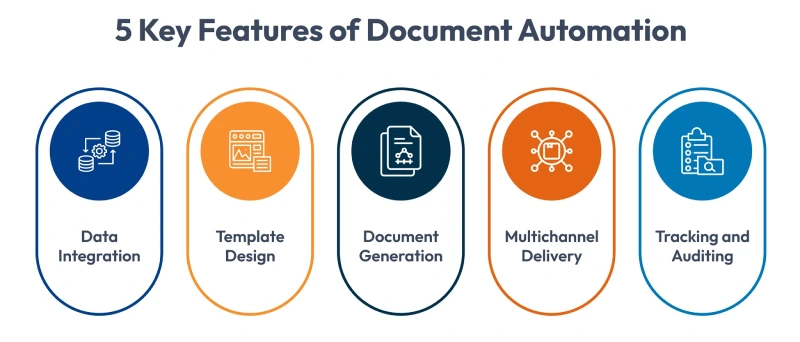
1- Data Integration
The first step of document automation is connecting data sources, such as CRM or ERP, to fetch customer details, like names, account numbers, and transaction history. This ensures every document reflects accurate, real-time information without the need for manual data entry.
2- Template Design
Predefined templates include layouts and placeholders for inserting data. They maintain consistency in branding, tone, and formatting. At the same time, they allow flexibility so documents can be personalized based on customer needs and compliance requirements.
3- Document Generation
Once templates and data are in place, the system generates documents instantly. Whether it’s a contract, policy letter, invoice, or monthly statement, documentation automation ensures content is built accurately and in real time.
4- Multichannel Delivery
After generation, documents are sent through the customer’s preferred channels. Multichannel delivery ensures businesses can reach every customer effectively while providing flexibility and convenience.
5- Tracking and Auditing
Every document created and delivered is logged in to the system. Tracking and audit trails help businesses meet compliance and monitor communication performance.

4 Key Strategies for Achieving Consistent Communication and Impactful Customer Interactions
Get a clear roadmap for building trust, delivering value, and strengthening customer relationships.
What are the Benefits of Document Automation for Customer Communications
Document automation not only reduces repetitive work but also enhances customer experience. Below are the key benefits of document automation tools explained in detail:
Faster Communication
In industries like insurance or banking, customers no longer want to wait for days for letters or agreements. With document automation in place, documents can be generated and delivered in minutes. This speed helps businesses respond to customer needs in real time and enables sales reps to handle communications quickly.
Improved Accuracy
Manual document creation is prone to errors, such as incorrect amounts or missing details. Document automation eliminates inaccuracies by pulling information directly from reliable data sources like CRM and ERP. Every document is produced using the most up-to-date information, ensuring customers get accurate and consistent information.
Personalized Communication
Document automation and customer communication automation allow organizations to personalize messages for thousands of customers without extra effort. For example, an insurance renewal letter can automatically adjust language, coverage details, and discounts based on the customer’s profile.
Cost Efficiency
Creating documents manually requires time, cost, and effort. Document automation reduces the time and costs by digitizing the process. Organizations can save team efforts and money by moving away from physical documents, while still maintaining flexibility for customers. In addition, compliance penalties from errors or delays are reduced.
Compliance and Security
In regulated industries such as healthcare, insurance, and finance, organizations must follow regulations for document creation, storage, and delivery. Document automation solutions enforce standardized templates, maintain audit trails, and apply rules consistently. This reduces the risk of missing disclosures, using outdated terms, or failing to meet legal requirements. Many systems also include encryption and secure delivery methods, which protect sensitive customer data from unauthorized access.
Better Customer Satisfaction
When customers receive communications that are timely, accurate, and tailored to their needs, they are more likely to feel satisfied. Document automation brings a consistent and reliable communication approach that builds trust and encourages long-term relationships. Satisfied customers are not only more loyal but also more willing to recommend a company to others.
Role of CCM Platforms in Document Automation
While document automation handles generation and delivery, a Customer Communication Management (CCM) platform brings everything together. A CCM system centralizes customer communication automation processes, ensuring consistent messaging and managing delivery across channels. Organizations can use CCM platforms to:
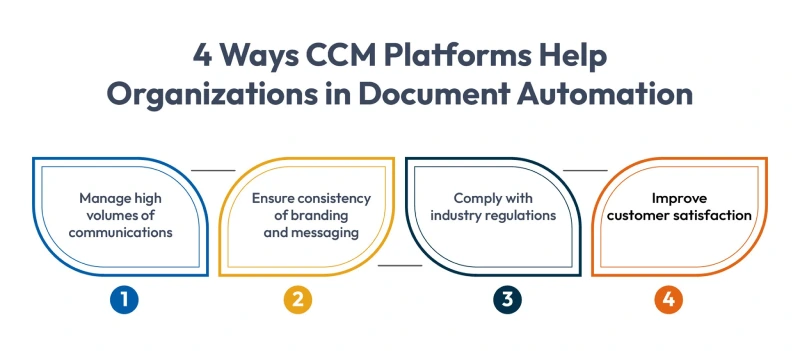
- Manage high volumes of communications.
- Ensure consistency of branding and messaging.
- Comply with industry regulations.
- Improve customer satisfaction with personalized and timely communications.
Cincom Eloquence is designed for enterprises in industries like insurance, banking, manufacturing, and utilities. It integrates document automation with broader customer communication automation, making it easier for businesses to deliver compliant, accurate, and engaging communication.
As customer expectations rise, organizations will need to embrace advanced document automation and customer communication automation platforms to remain competitive. The ability to deliver personalized, accurate, and compliant communications instantly will define leaders in every industry. Businesses that act today will not only improve operational efficiency but also build stronger, more lasting customer relationships.
FAQs
1- What is document automation, and why is it important?
Document automation is the use of technology and online platforms to create business documents automatically using data and templates. It helps organizations reduce manual work and streamline customer communication across different channels, including chat, messaging, and email.
2- How does document automation improve customer communications?
Document automation ensures communication with customers is accurate, consistent, and personalized, and delivered through customers’ preferred channels. This enhances overall communications and boosts customer satisfaction.
3- What industries benefit most from document automation?
Primary industries that benefit the most from document automation are insurance, banking, healthcare, and manufacturing industries.
4- How does document automation ensure compliance and accuracy?
By using predefined templates, secure data sources, and audit trails, document automation helps organizations meet regulations and compliance.
5- What role does Customer Communication Management (CCM) play in document automation?
A Customer Communication Management (CCM) platform helps organizations manage templates, delivery channels, compliance, and branding, making document automation more effective, accurate, and scalable.
6- How do automated communication tools improve customer satisfaction?
Automated communication tools improve customer satisfaction by delivering fast, accurate, and personalized messages. They keep customers informed and engaged throughout the customer journey.